Back
Live
Mantua protocol
Mantua protocol
Live
A DeFi platform that lets you execute trades and liquidity steps instantly through natural language commands.
A DeFi platform that lets you execute trades and liquidity steps instantly through natural language commands.
UI Designer
Web3
UX Researcher
Figma
Webapp
Crypto
UI Designer
Web3
UX Researcher
Figma
Webapp
Crypto
UI Designer
Web3
UX Researcher
Figma
Webapp
Crypto
Important links
View full casestudy
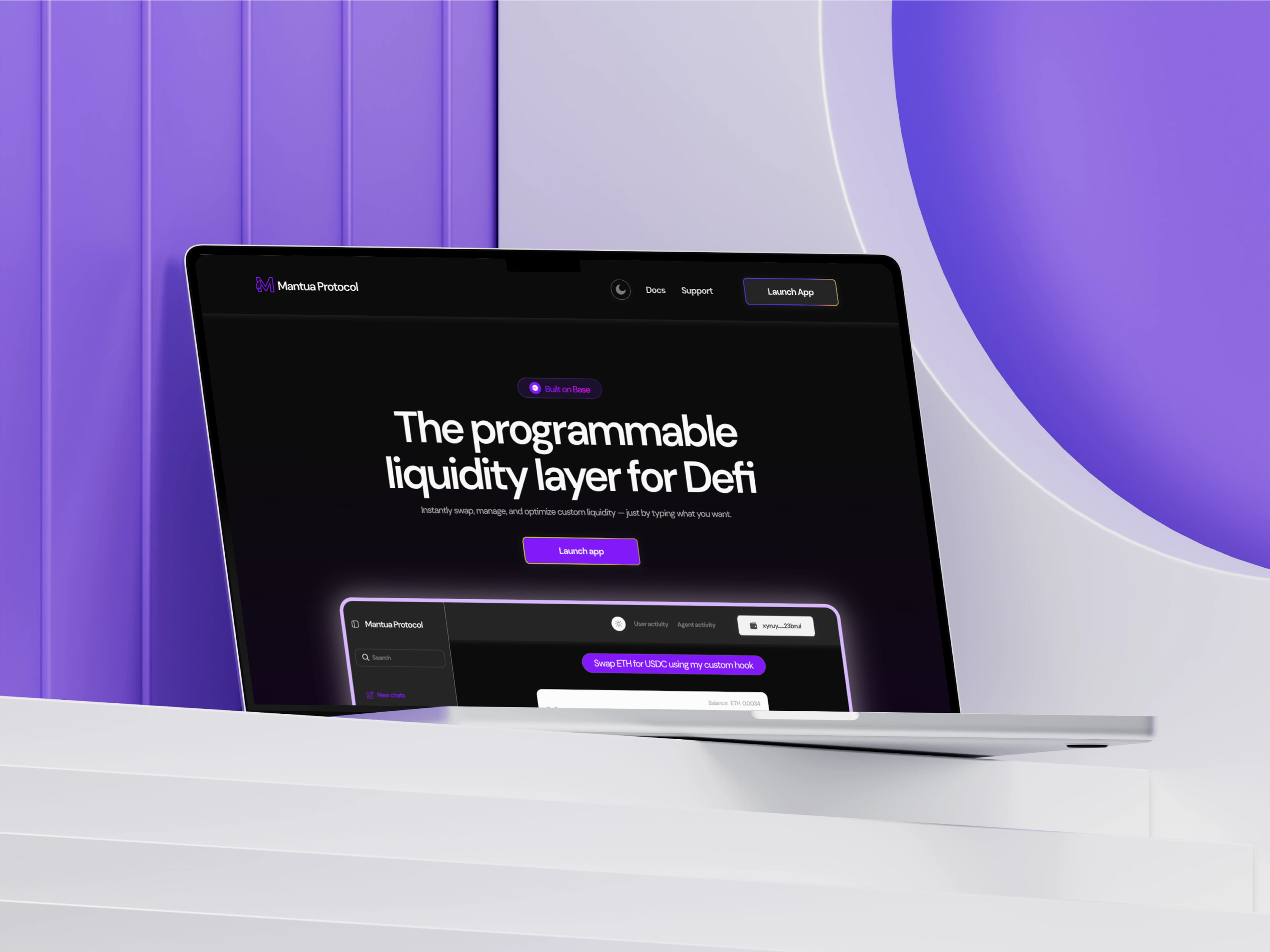
When the founder of Mantua first reached out to me, the platform already had a Version 1 but nothing was really working the way it should. The main interface was completely AI-generated and didn’t function, the website didn’t match the actual product, and the whole experience felt disconnected.
And to make things more interesting…
I had 14 days to redesign both the website and the main product interface from scratch.
I had never worked on a DeFi or Web3 project before, but I saw it as a challenge I genuinely wanted to take on. That was the beginning of this crazy, intense, but very rewarding design journey.
Routemaster started from a personal frustration. I was trying to visit a family member, asked for directions, and still almost got down at the wrong bus stop because someone else told me something different.
It reminded me how confusing public transport can be in Lagos, especially when you don’t take buses every day. That small moment sparked the idea for an app that gives clear, dependable directions without stress or guesswork.
The Problem
The Problem
Mantua had a strong idea:
“What if people could interact with DeFi just by using simple natural language?”
But the execution wasn’t matching the vision. The problems were clear:
The UI didn’t build trust, it looked like a quick AI mockup.
The website and product felt like two different brands. The product was totally broken.
New users had no guidance.
Core functions like liquidity, hooks, and swaps were not explained.
The platform looked too technical for beginners and too empty for advanced users.
Nothing flowed, you couldn’t tell where to start or what to do.
So my job wasn’t only to create screens…
I had to make the product understandable, usable, and trustworthy, all under a tight deadline.
Mantua had a strong idea:
“What if people could interact with DeFi just by using simple natural language?”
But the execution wasn’t matching the vision. The problems were clear:
The UI didn’t build trust, it looked like a quick AI mockup.
The website and product felt like two different brands. The product was totally broken.
New users had no guidance.
Core functions like liquidity, hooks, and swaps were not explained.
The platform looked too technical for beginners and too empty for advanced users.
Nothing flowed, you couldn’t tell where to start or what to do.
So my job wasn’t only to create screens…
I had to make the product understandable, usable, and trustworthy, all under a tight deadline.
The Process
The Process
Jumping Into a Space I Didn’t Know
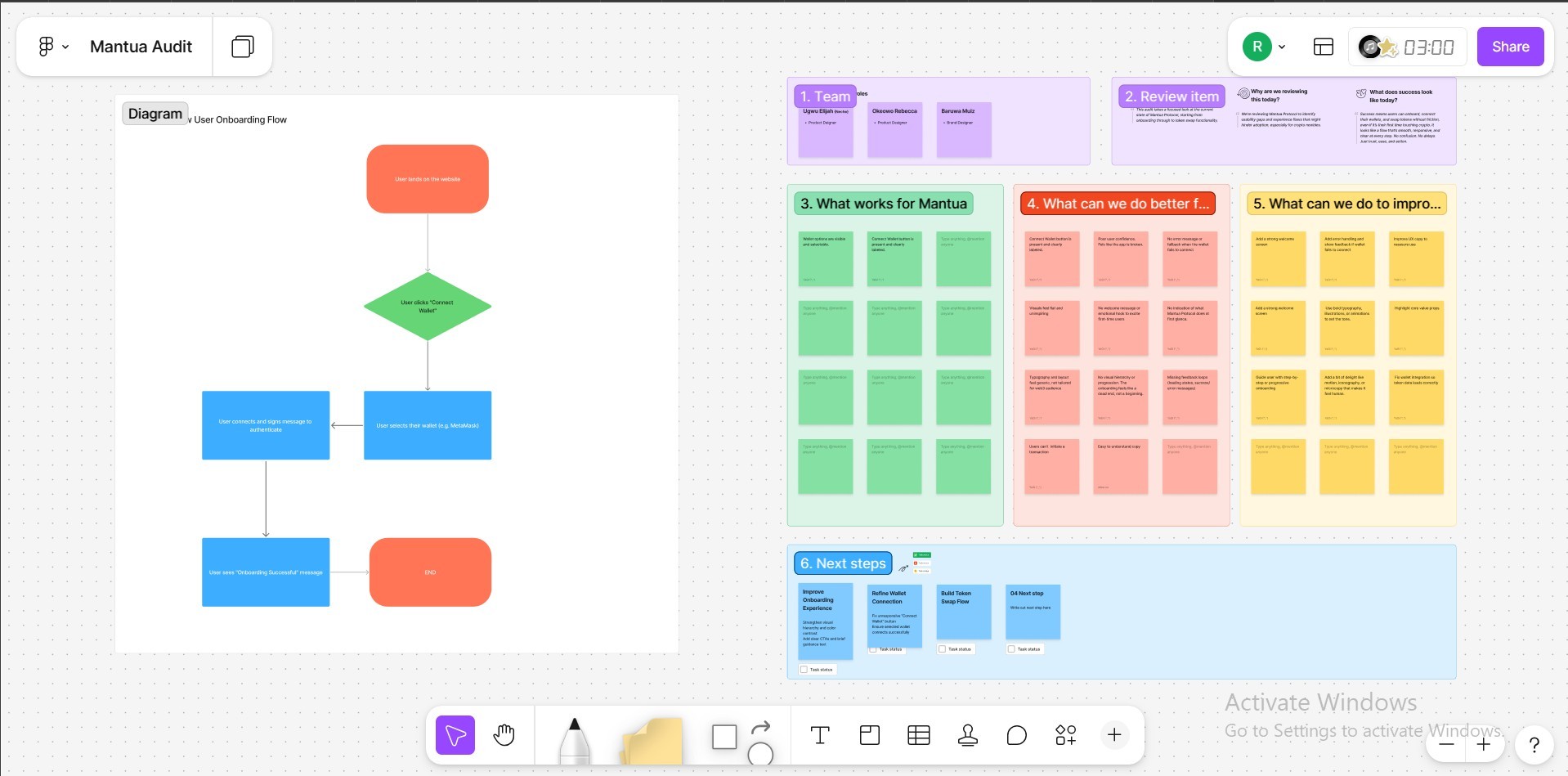
This was my first real DeFi project. So my first 2–3 days were pure learning mode:
I had to read on liquidity pools, swaps, hooks, dynamic fees, LP tokens… all of it.
I had to understand the product before I could fix it.
Understanding Why V1 Failed
I studied the existing interface and found:
unclear flows
no structure
no visual hierarchy
too much jargon
too many AI placeholders
nothing guiding the user
poor trust signals
Basically, V1 had the idea but not the design foundation.
Working Closely With the Founder & Team
We were communicating constantly. Ideas, questions, examples, screenshots, fixes, everything happened fast.
We literally built the new version piece by piece, screen by screen.
At some point, I was designing in my dreams (no joke).
Rebuilding the Experience From Zero
I redesigned:
the entire website
the main interface
the natural-language command section
the liquidity experience
the hook selection flow
the swap flow
the “understanding DeFi” explanations
the onboarding
Everything had to feel simple, clean, and human.
Making Web3 Feel Less “Web3”
Instead of throwing technical words at users, I broke things down into:
clear steps
easy language
simple actions like “Swap ETH to USDC”
tooltips that explain complicated ideas in plain English
UI patterns people are already familiar with
My goal was to make DeFi feel like a normal product and not a puzzle.
Jumping Into a Space I Didn’t Know
This was my first real DeFi project. So my first 2–3 days were pure learning mode:
I had to read on liquidity pools, swaps, hooks, dynamic fees, LP tokens… all of it.
I had to understand the product before I could fix it.
Understanding Why V1 Failed
I studied the existing interface and found:
unclear flows
no structure
no visual hierarchy
too much jargon
too many AI placeholders
nothing guiding the user
poor trust signals
Basically, V1 had the idea but not the design foundation.
Working Closely With the Founder & Team
We were communicating constantly. Ideas, questions, examples, screenshots, fixes, everything happened fast.
We literally built the new version piece by piece, screen by screen.
At some point, I was designing in my dreams (no joke).
Rebuilding the Experience From Zero
I redesigned:
the entire website
the main interface
the natural-language command section
the liquidity experience
the hook selection flow
the swap flow
the “understanding DeFi” explanations
the onboarding
Everything had to feel simple, clean, and human.
Making Web3 Feel Less “Web3”
Instead of throwing technical words at users, I broke things down into:
clear steps
easy language
simple actions like “Swap ETH to USDC”
tooltips that explain complicated ideas in plain English
UI patterns people are already familiar with
My goal was to make DeFi feel like a normal product and not a puzzle.
The Solution
The Solution
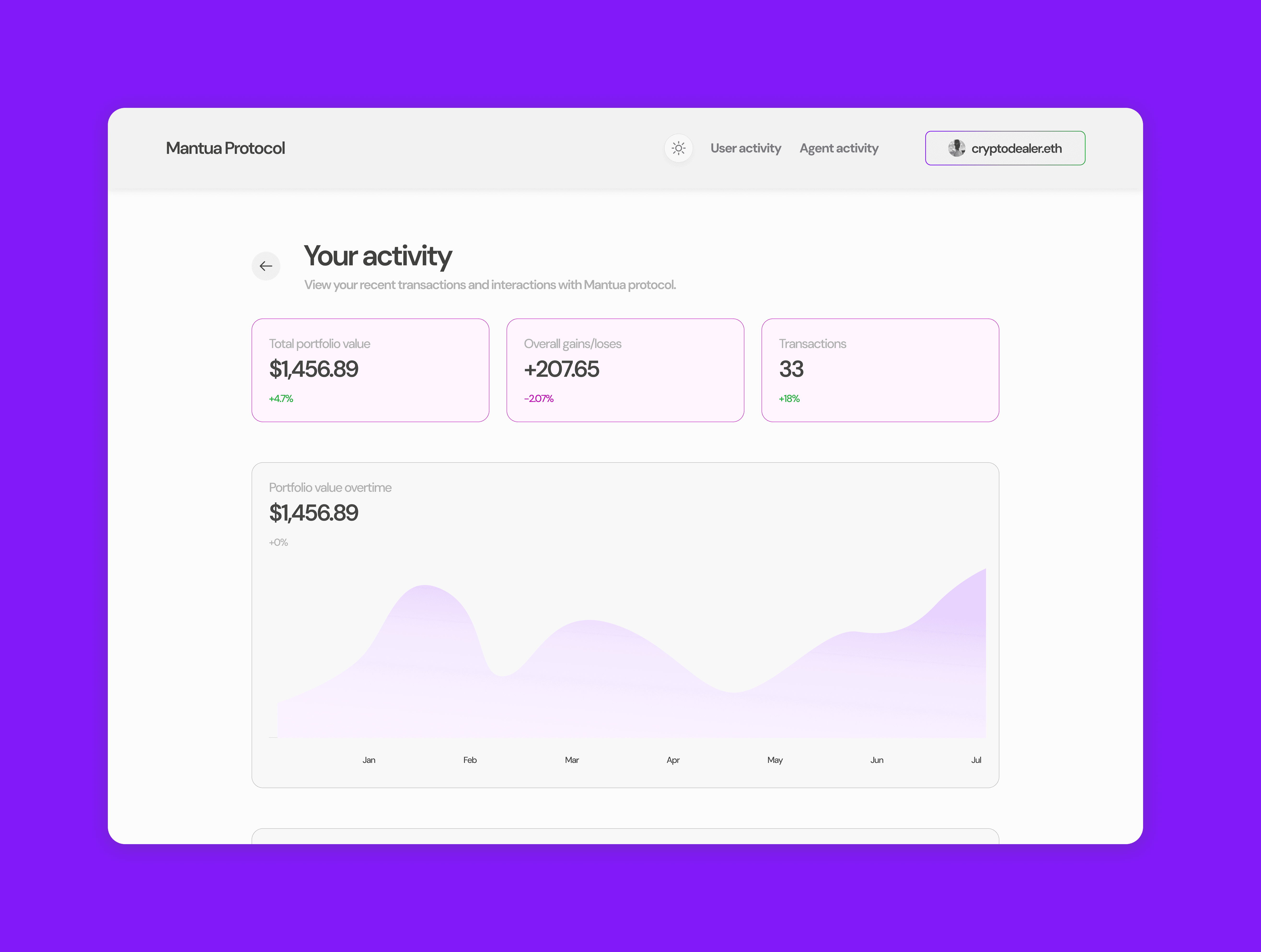
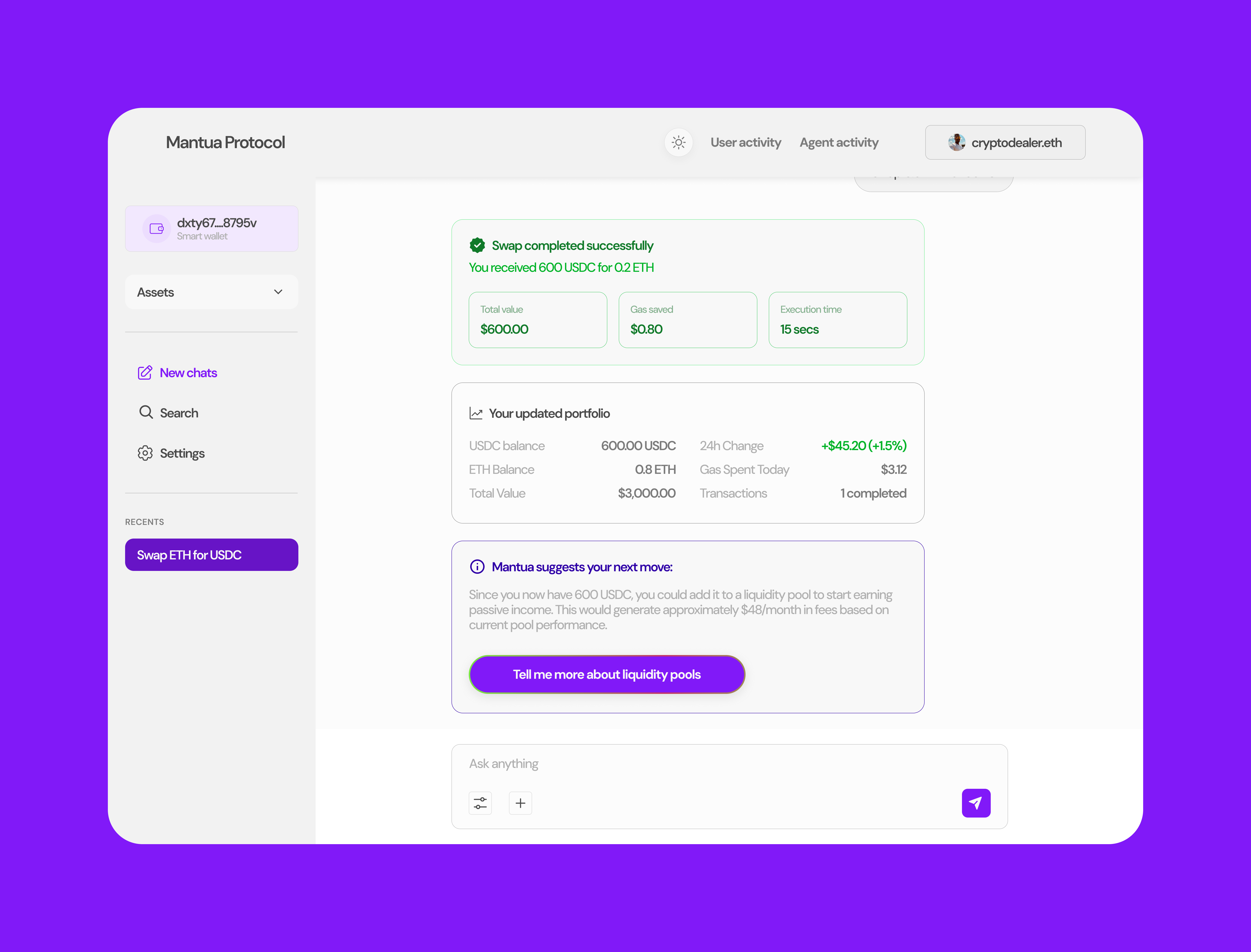
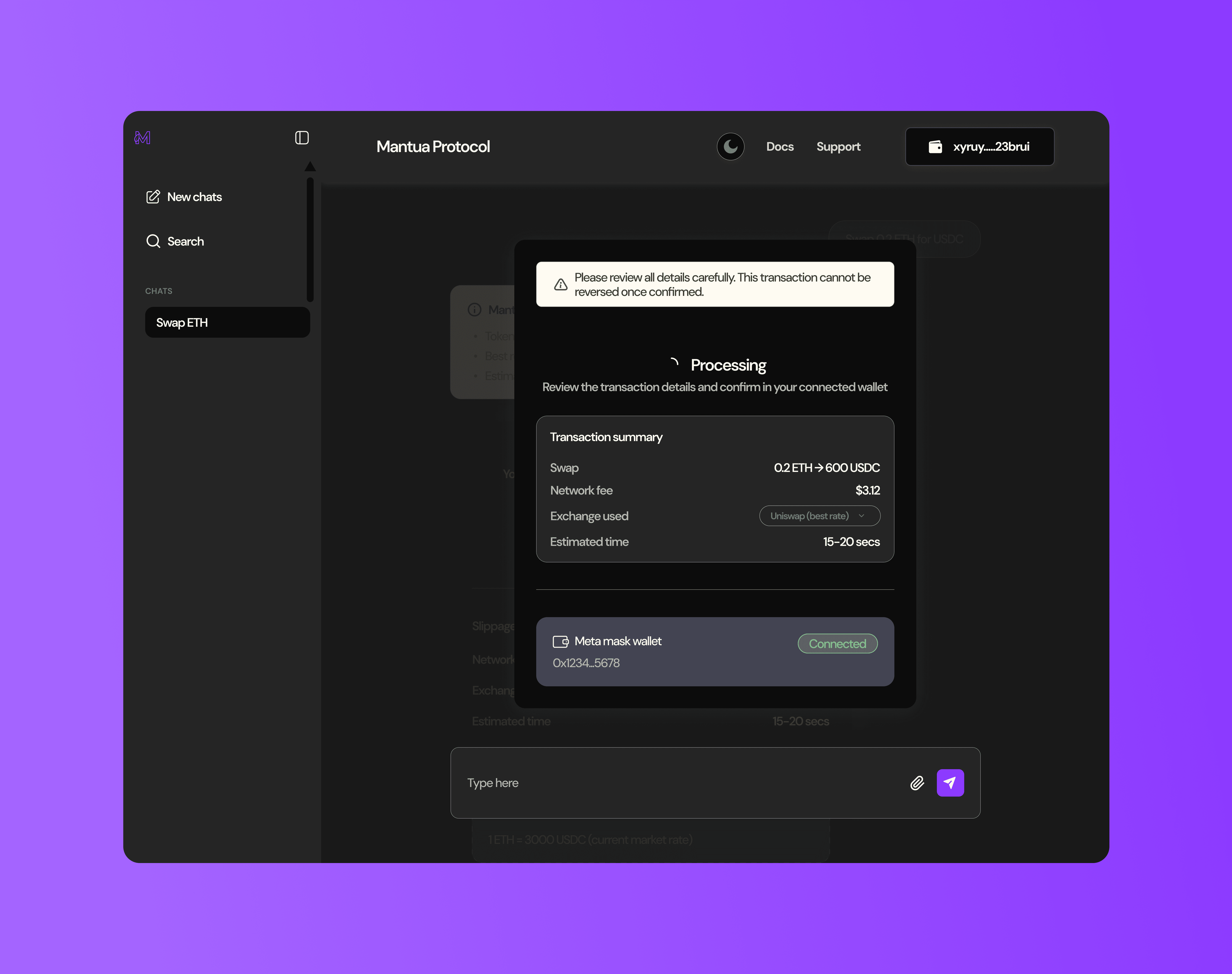
By the end of the redesign, Mantua had:
a clean, modern interface
a website that matched the product
a much clearer user journey
simple step-by-step flows
a conversational command center that actually made sense
better explanations for complex ideas
a visual system that finally built trust
The whole experience became predictable, simple, and friendly.
By the end of the redesign, Mantua had:
a clean, modern interface
a website that matched the product
a much clearer user journey
simple step-by-step flows
a conversational command center that actually made sense
better explanations for complex ideas
a visual system that finally built trust
The whole experience became predictable, simple, and friendly.
The Results
The Results
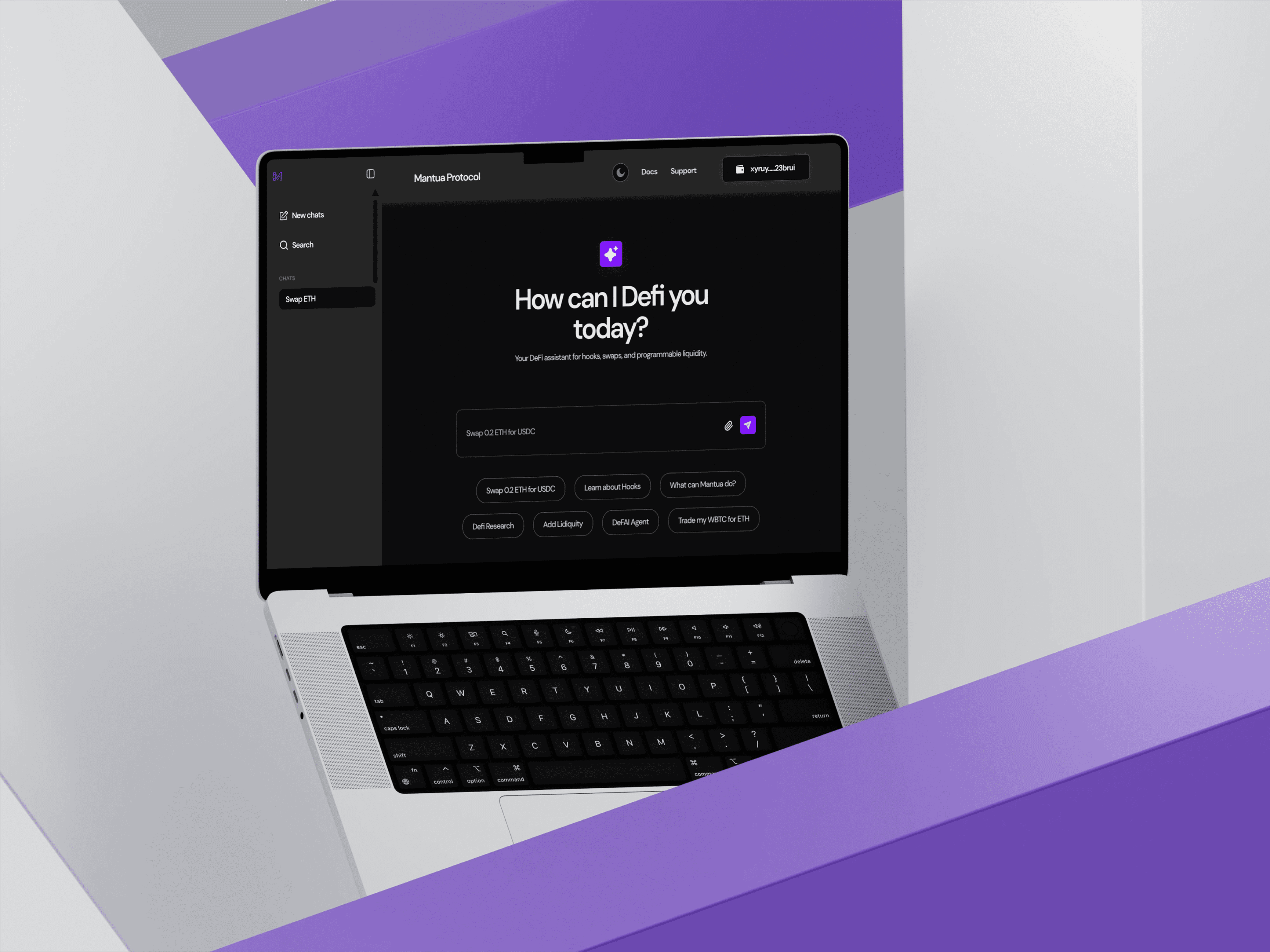
In 14 days, we moved from a broken V1 to a fully redesigned platform that:
feels consistent
is easier to understand
looks more trustworthy
guides users instead of confusing them
creates a smoother entry point for anyone exploring DeFi
This project challenged me in every way — new space, new concepts, tight deadline — but it also taught me how far good design, curiosity, and communication can take a product.
In 14 days, we moved from a broken V1 to a fully redesigned platform that:
feels consistent
is easier to understand
looks more trustworthy
guides users instead of confusing them
creates a smoother entry point for anyone exploring DeFi
This project challenged me in every way — new space, new concepts, tight deadline — but it also taught me how far good design, curiosity, and communication can take a product.
Important links
View full casestudy
When the founder of Mantua first reached out to me, the platform already had a Version 1 but nothing was really working the way it should. The main interface was completely AI-generated and didn’t function, the website didn’t match the actual product, and the whole experience felt disconnected.
And to make things more interesting…
I had 14 days to redesign both the website and the main product interface from scratch.
I had never worked on a DeFi or Web3 project before, but I saw it as a challenge I genuinely wanted to take on. That was the beginning of this crazy, intense, but very rewarding design journey.
The Problem
Mantua had a strong idea:
“What if people could interact with DeFi just by using simple natural language?”
But the execution wasn’t matching the vision. The problems were clear:
The UI didn’t build trust, it looked like a quick AI mockup.
The website and product felt like two different brands. The product was totally broken.
New users had no guidance.
Core functions like liquidity, hooks, and swaps were not explained.
The platform looked too technical for beginners and too empty for advanced users.
Nothing flowed, you couldn’t tell where to start or what to do.
So my job wasn’t only to create screens…
I had to make the product understandable, usable, and trustworthy, all under a tight deadline.
The Process
Jumping Into a Space I Didn’t Know
This was my first real DeFi project. So my first 2–3 days were pure learning mode:
I had to read on liquidity pools, swaps, hooks, dynamic fees, LP tokens… all of it.
I had to understand the product before I could fix it.
Understanding Why V1 Failed
I studied the existing interface and found:
unclear flows
no structure
no visual hierarchy
too much jargon
too many AI placeholders
nothing guiding the user
poor trust signals
Basically, V1 had the idea but not the design foundation.
Working Closely With the Founder & Team
We were communicating constantly. Ideas, questions, examples, screenshots, fixes, everything happened fast.
We literally built the new version piece by piece, screen by screen.
At some point, I was designing in my dreams (no joke).
Rebuilding the Experience From Zero
I redesigned:
the entire website
the main interface
the natural-language command section
the liquidity experience
the hook selection flow
the swap flow
the “understanding DeFi” explanations
the onboarding
Everything had to feel simple, clean, and human.
Making Web3 Feel Less “Web3”
Instead of throwing technical words at users, I broke things down into:
clear steps
easy language
simple actions like “Swap ETH to USDC”
tooltips that explain complicated ideas in plain English
UI patterns people are already familiar with
My goal was to make DeFi feel like a normal product and not a puzzle.
The Solution
By the end of the redesign, Mantua had:
a clean, modern interface
a website that matched the product
a much clearer user journey
simple step-by-step flows
a conversational command center that actually made sense
better explanations for complex ideas
a visual system that finally built trust
The whole experience became predictable, simple, and friendly.
The Results
In 14 days, we moved from a broken V1 to a fully redesigned platform that:
feels consistent
is easier to understand
looks more trustworthy
guides users instead of confusing them
creates a smoother entry point for anyone exploring DeFi
This project challenged me in every way — new space, new concepts, tight deadline — but it also taught me how far good design, curiosity, and communication can take a product.
©
Okeowo Rebecca portfolio 2025
All rights reserved
Bibi.
Built with love on framer
Social media
©
Okeowo Rebecca portfolio 2025
All rights reserved
Bibi.
Built with love on framer
Social media
Bibi.
Built with love on framer
Social media
©
Okeowo Rebecca portfolio 2025
All rights reserved