Workaz began as a simple idea, that is: make it easier for people to find reliable workmen without stress or uncertainty. When the founder reached out to me, the platform existed only as an idea, they had no wireframes, no screens or structure. I was responsible for building the entire product experience from the ground up.
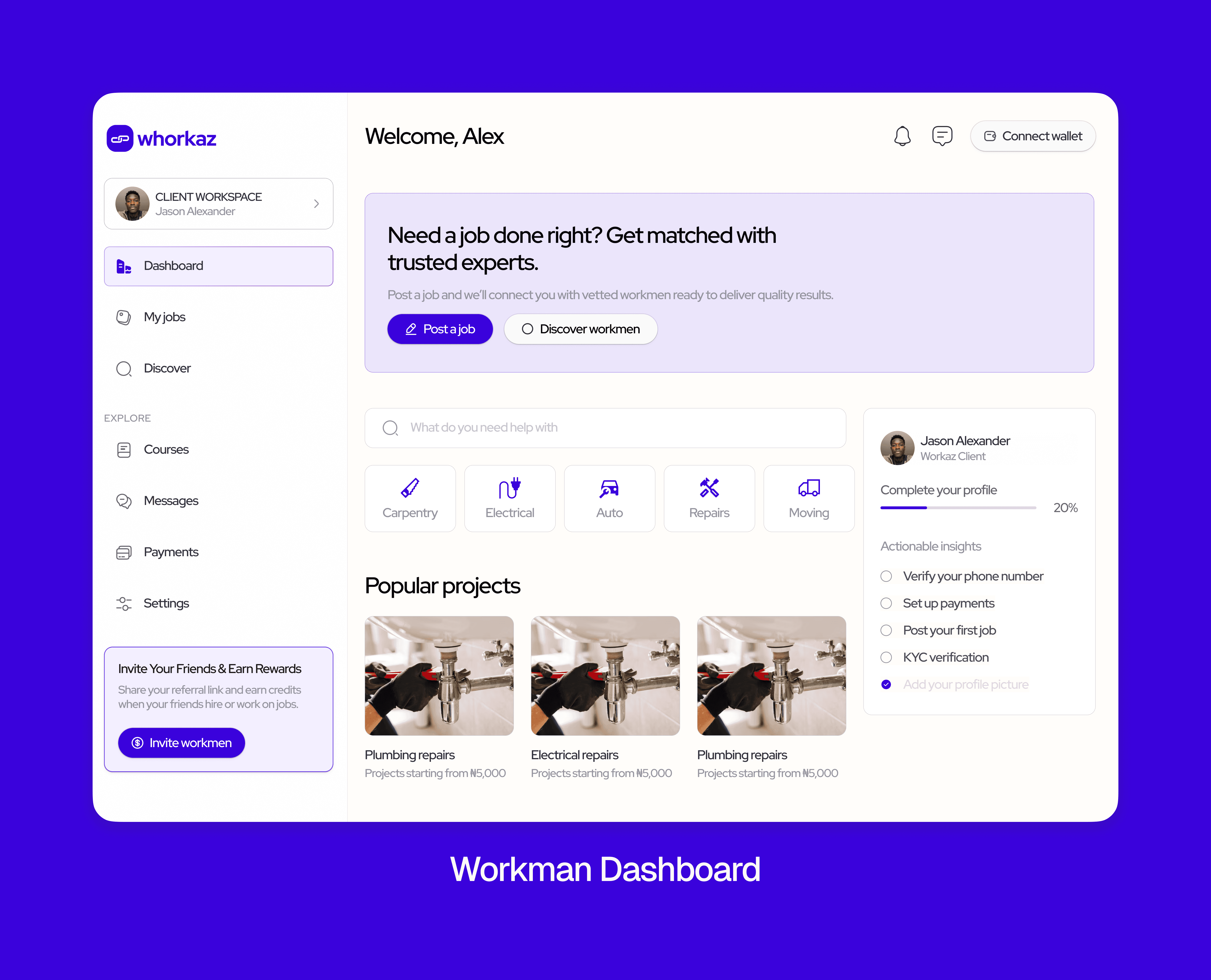
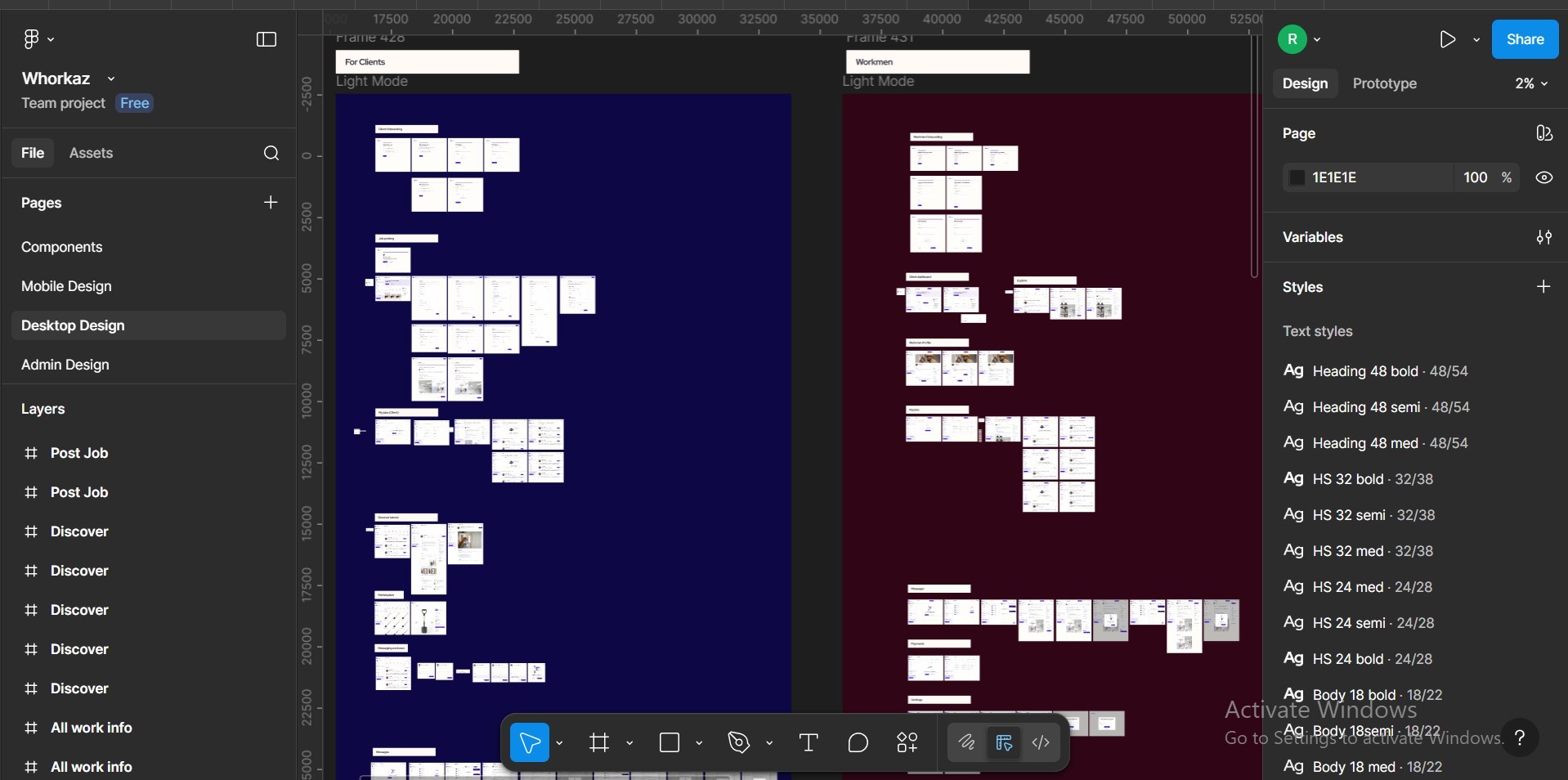
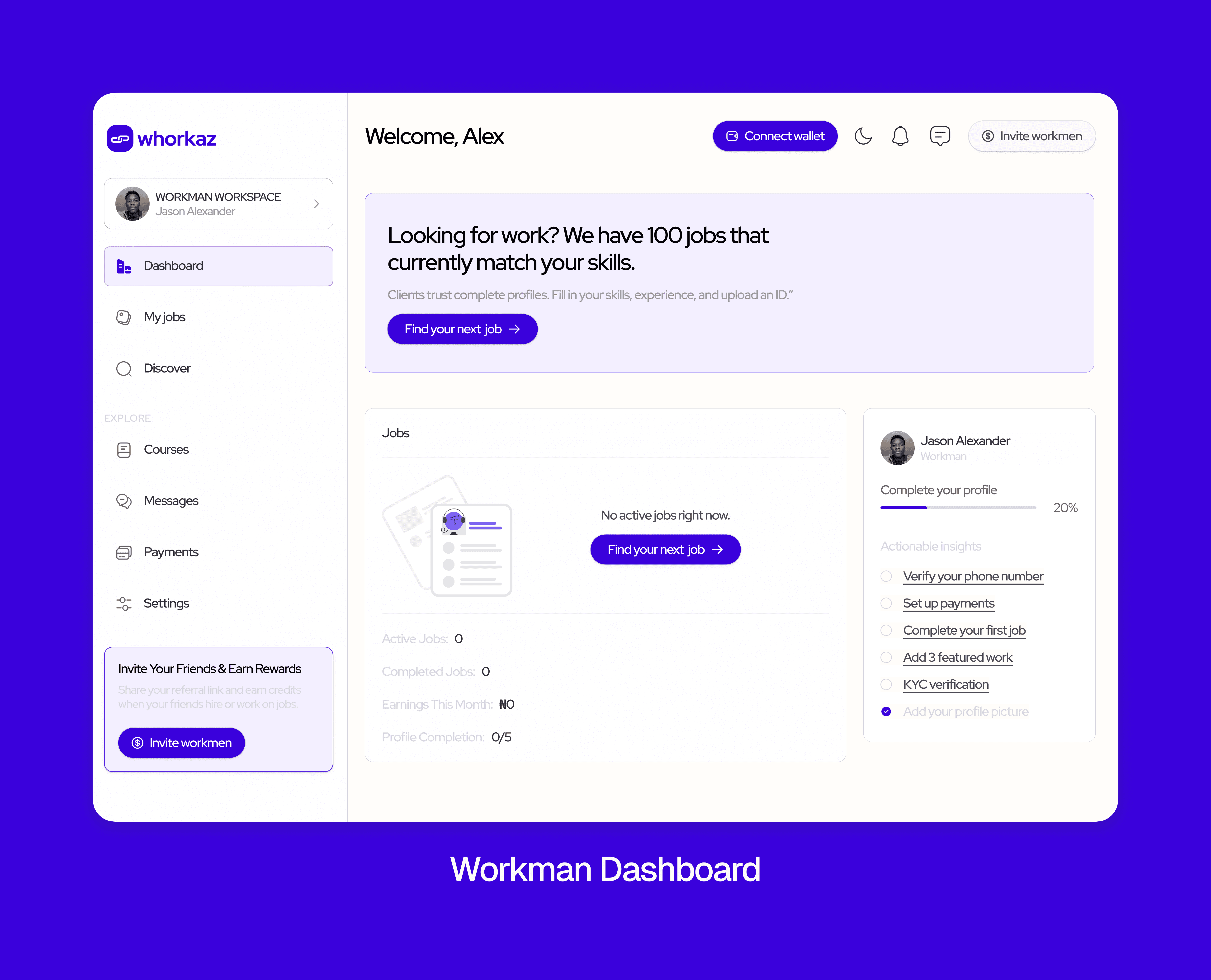
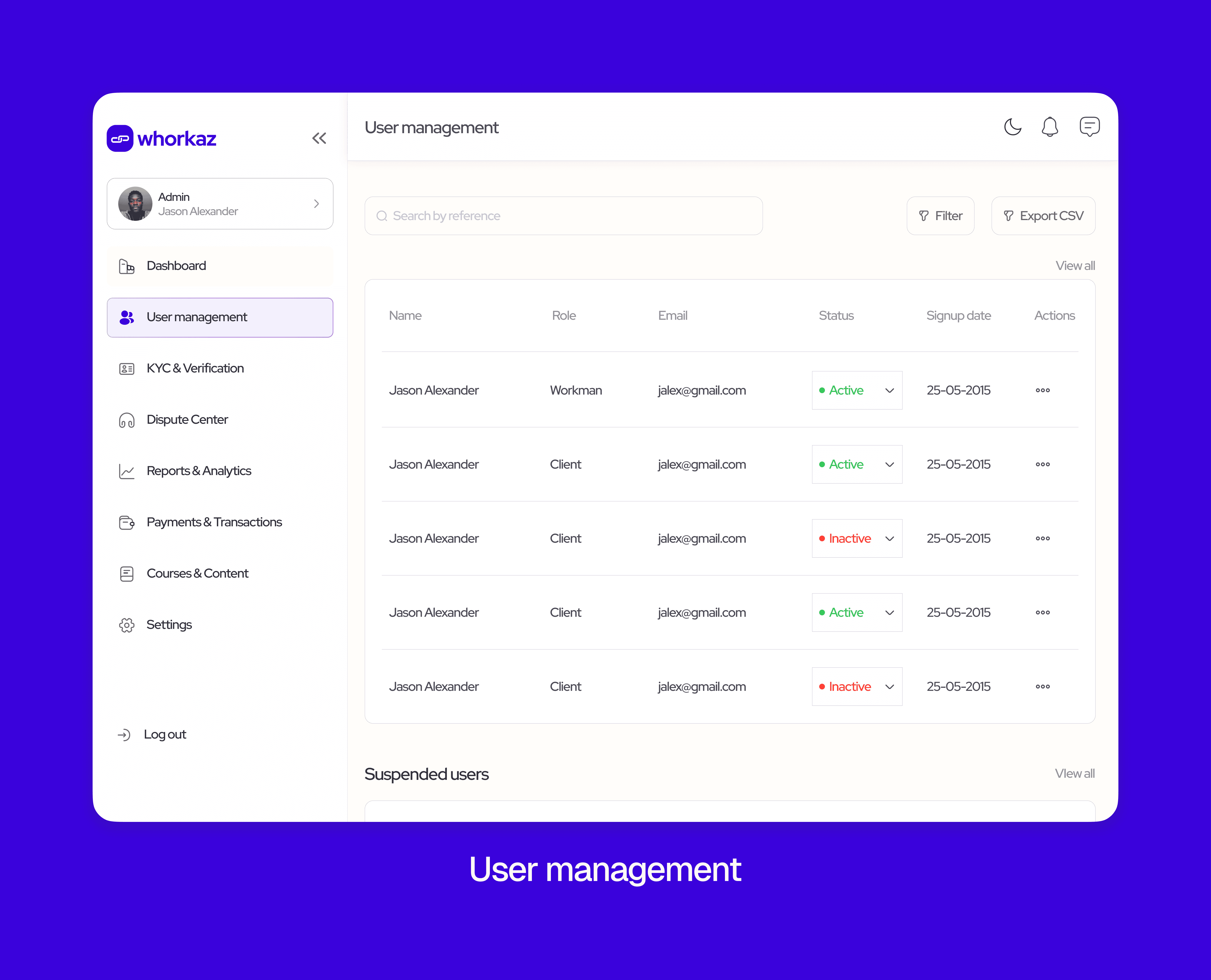
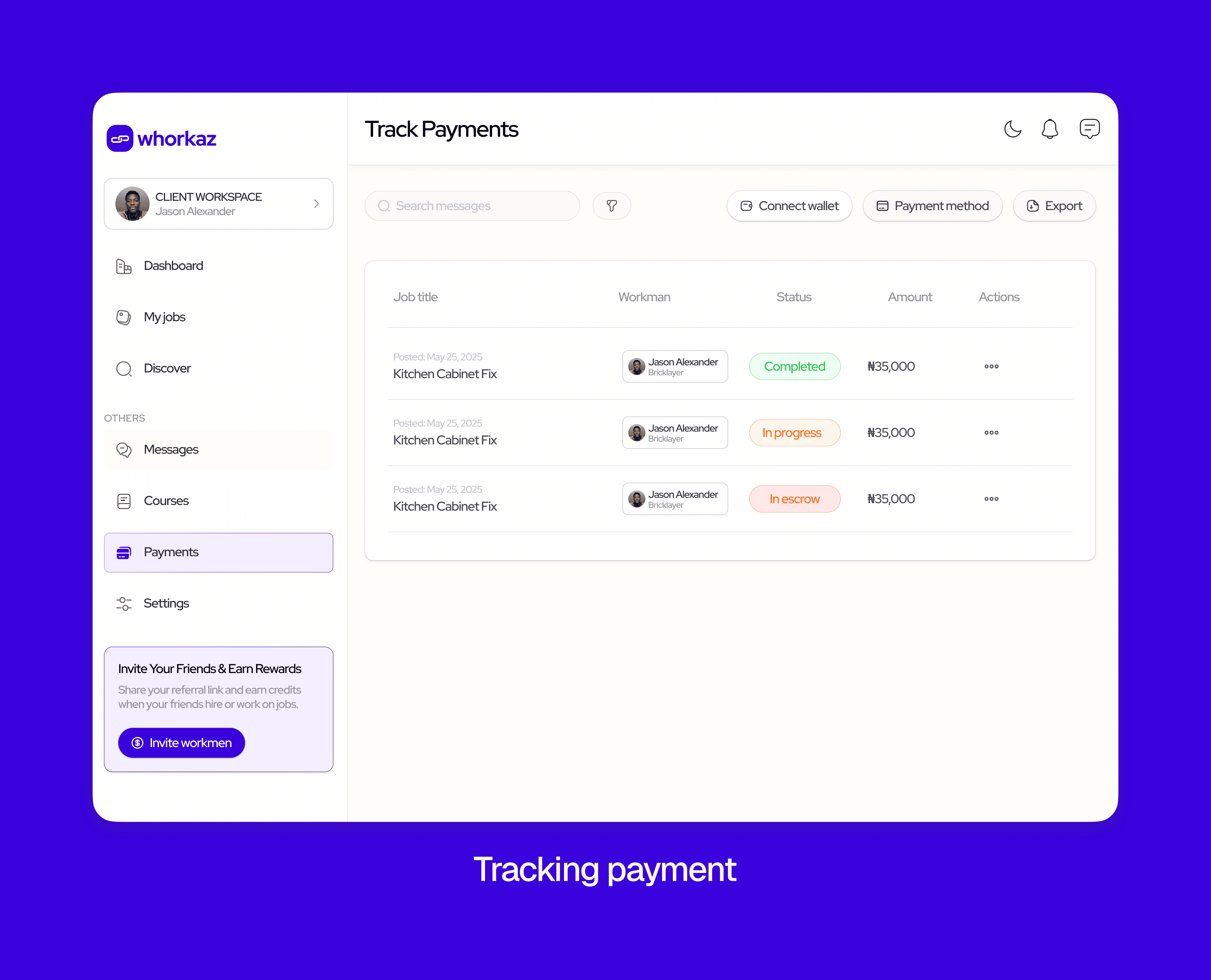
This meant defining the user flows, the design system, the interface content, the dashboards, and the experience for all user types: clients, workmen, and admins.
It was an opportunity to shape a digital product with clarity, trust, and usability at its core.
The Client & What They Wanted
The Client & What They Wanted
The founder wanted a platform that would:
Connect clients with verified, reliable workmen
Give workmen a fair place to find steady jobs
Build trust through strong verification methods like BVN and ID checks
Provide clear communication and secure payments
Allow an admin team to manage users, disputes, verification, and content
Create space for skills development with courses and certifications
My job was to turn this vision into an organized, human-centered experience.
The Problem
The Problem
People often struggle to find skilled, trustworthy workmen.
Workmen struggle to find steady, legitimate jobs.
And without proper verification and structure, both parties face risk.
Workaz needed a platform that solves these challenges by:
Providing transparency
Reducing fraud
Guiding users clearly
Ensuring communication is smooth
Helping admins maintain order
My mission was to build this solution from scratch.
My Process
My Process
I studied similar products like Upwork, TaskRabbit, Thumbtack, and marketplace apps to understand the expectations around hiring, ratings, messaging, and verification.
2. User Personas
I mapped out the needs of:
A client trying to hire quickly
A workman trying to get jobs
An admin trying to maintain platform quality
3. User Flows & Information Architecture
I created clear flows for onboarding, verification, job posting, hiring, messaging, payments, admin tasks, and more.
4. Wireframes
Low-fidelity sketches helped me define layout, hierarchy, and interactions.
5. Visual Design & Microcopy
I designed an interface with calm colors, straightforward language, and guidance at every step.
6. Design System
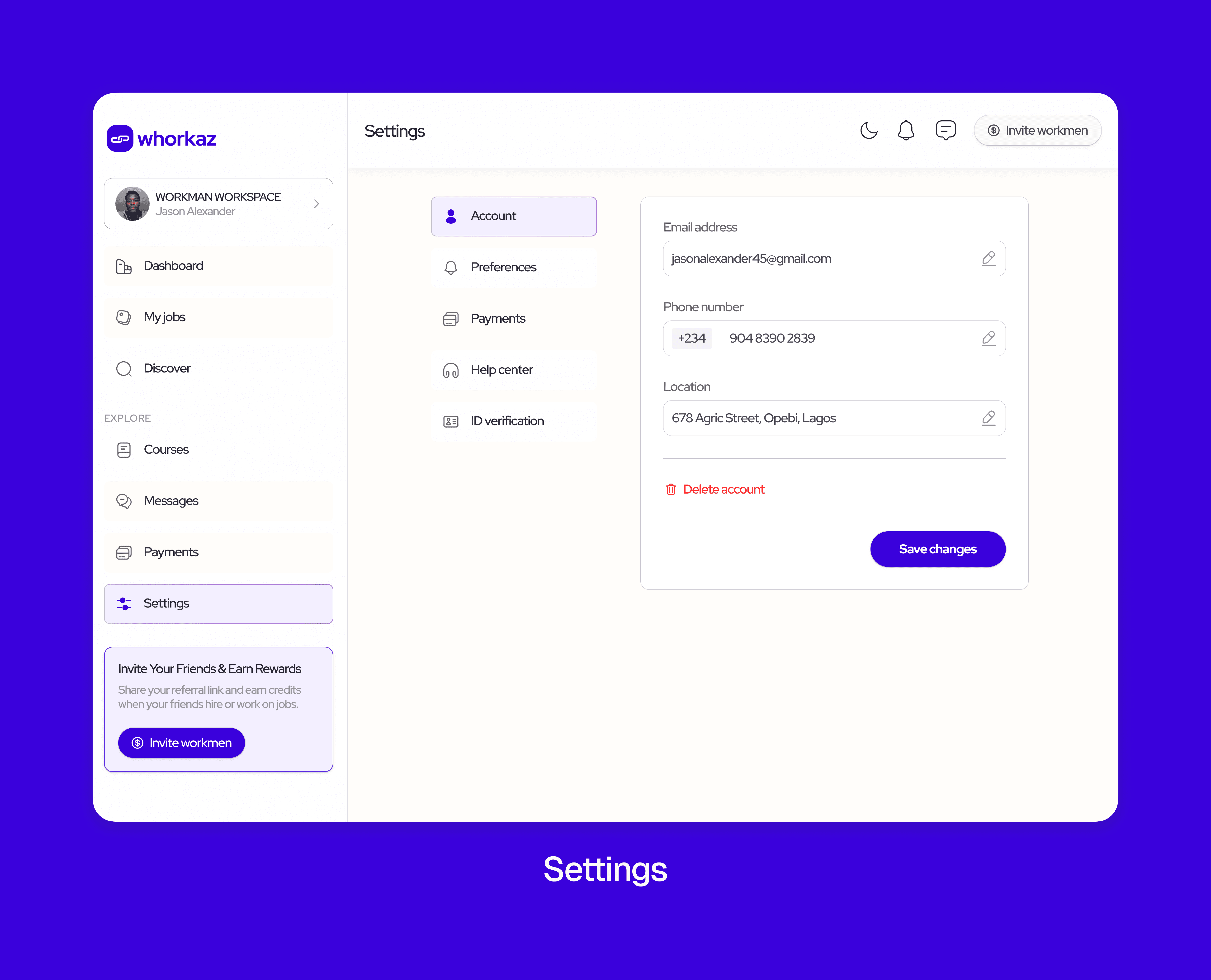
I created reusable components for consistency across all dashboards and pages.
Results
Results
By the end of the project, Workaz had:
A complete, end-to-end product design system
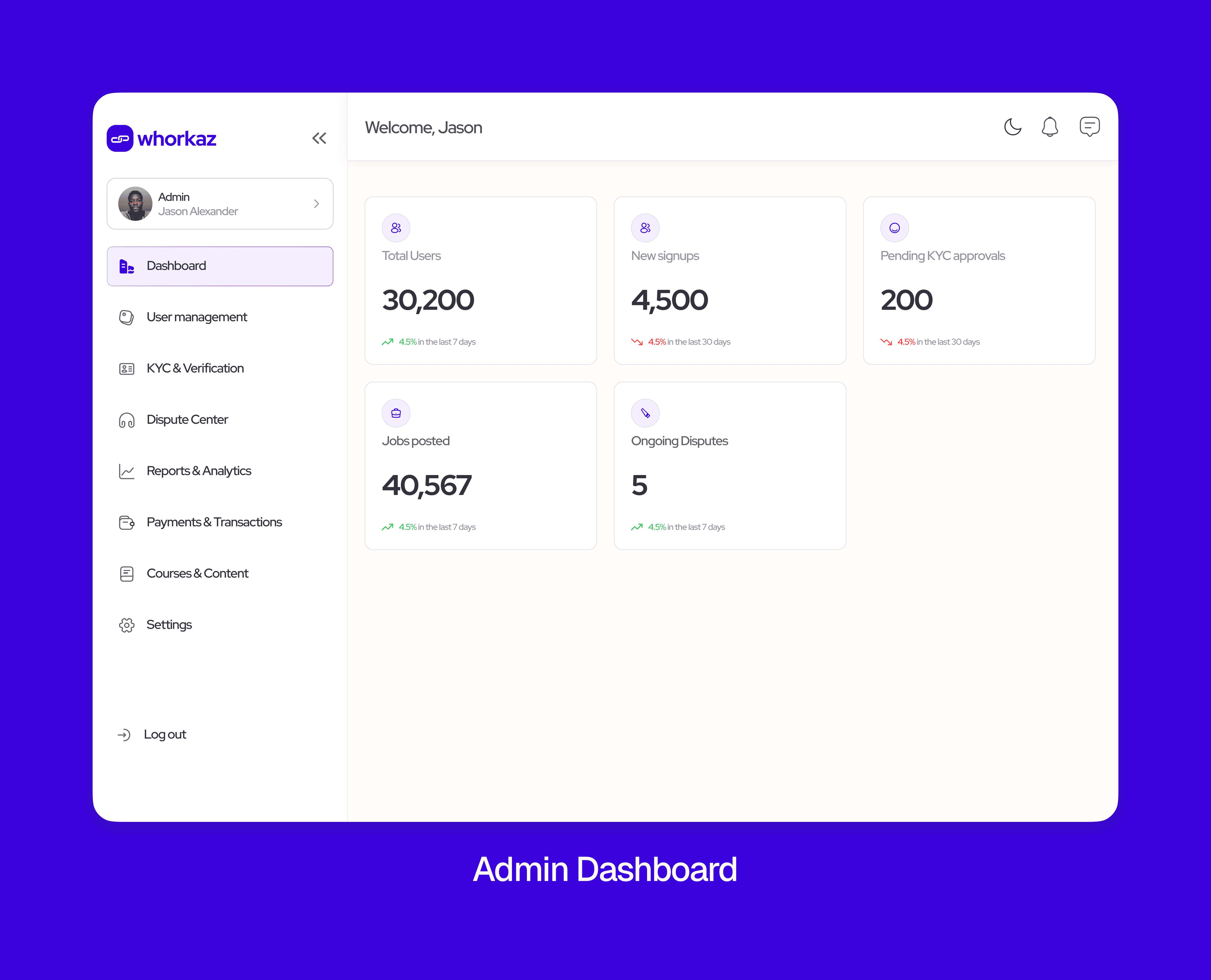
Tailored dashboards for clients, workmen, and admins
Strong verification and trust mechanisms (BVN, ID, badges)
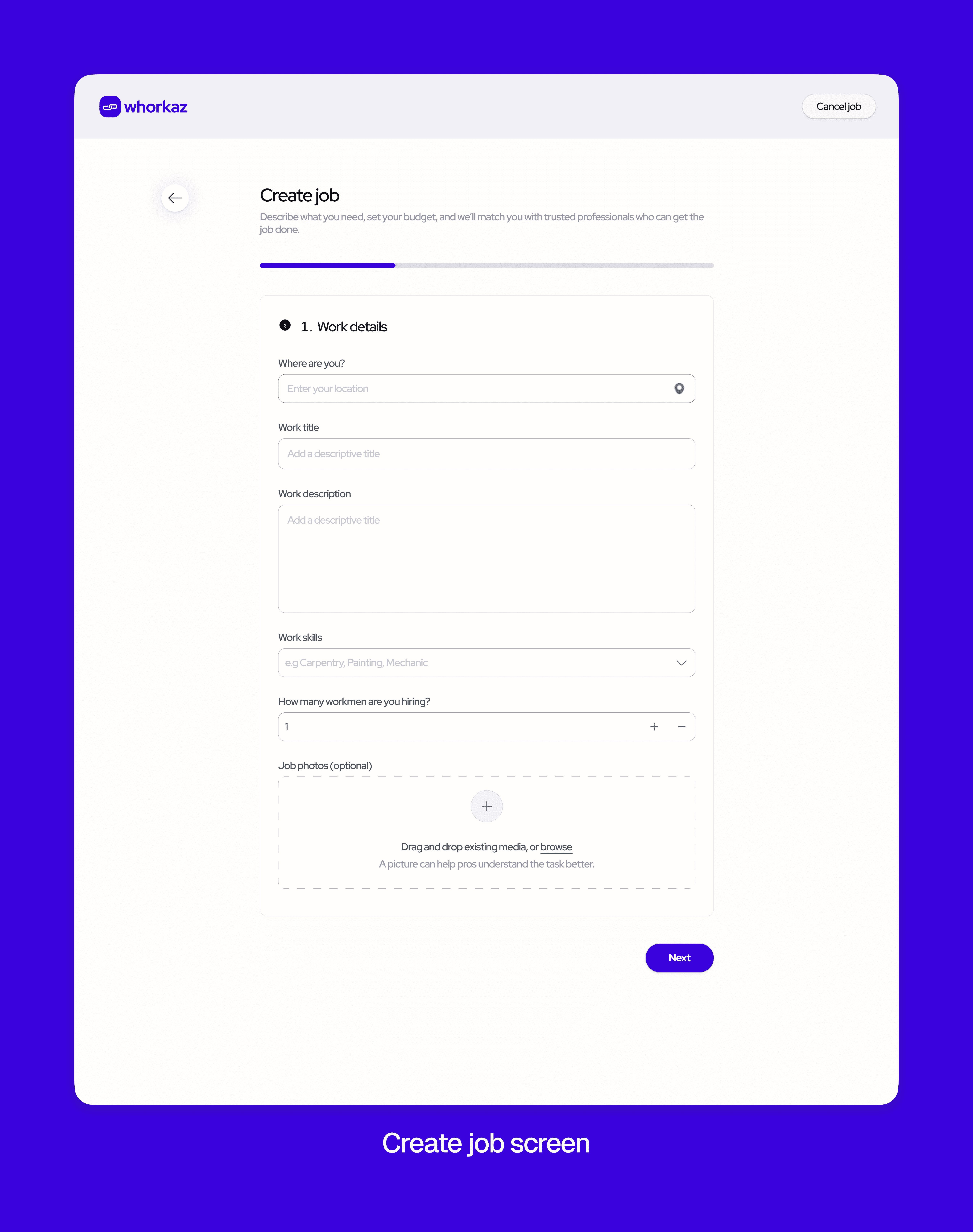
Clear job posting and hiring workflows
A robust messaging and payment structure
A course marketplace for upskilling
Admin tools for managing users, disputes, and content
Clean, consistent UI across the entire platform
Workaz transformed from an idea into a well-defined, scalable digital product.
This project allowed me to combine problem-solving, product thinking, and design strategy. Building Workaz from scratch taught me how to structure a complex system, design for different user groups, and create clarity in an environment where trust is crucial.
©
Okeowo Rebecca portfolio 2025
All rights reserved
Bibi.
Built with love on framer
Social media
Bibi.
Built with love on framer
Social media
©
Okeowo Rebecca portfolio 2025
All rights reserved
©
Okeowo Rebecca portfolio 2025
All rights reserved
Bibi.
Built with love on framer
Social media
Workaz began as a simple idea, that is: make it easier for people to find reliable workmen without stress or uncertainty. When the founder reached out to me, the platform existed only as an idea, they had no wireframes, no screens or structure. I was responsible for building the entire product experience from the ground up.
This meant defining the user flows, the design system, the interface content, the dashboards, and the experience for all user types: clients, workmen, and admins.
It was an opportunity to shape a digital product with clarity, trust, and usability at its core.
The Client & What They Wanted
The founder wanted a platform that would:
Connect clients with verified, reliable workmen
Give workmen a fair place to find steady jobs
Build trust through strong verification methods like BVN and ID checks
Provide clear communication and secure payments
Allow an admin team to manage users, disputes, verification, and content
Create space for skills development with courses and certifications
My job was to turn this vision into an organized, human-centered experience.
The Problem
People often struggle to find skilled, trustworthy workmen.
Workmen struggle to find steady, legitimate jobs.
And without proper verification and structure, both parties face risk.
Workaz needed a platform that solves these challenges by:
Providing transparency
Reducing fraud
Guiding users clearly
Ensuring communication is smooth
Helping admins maintain order
My mission was to build this solution from scratch.
My Process
I studied similar products like Upwork, TaskRabbit, Thumbtack, and marketplace apps to understand the expectations around hiring, ratings, messaging, and verification.
2. User Personas
I mapped out the needs of:
A client trying to hire quickly
A workman trying to get jobs
An admin trying to maintain platform quality
3. User Flows & Information Architecture
I created clear flows for onboarding, verification, job posting, hiring, messaging, payments, admin tasks, and more.
4. Wireframes
Low-fidelity sketches helped me define layout, hierarchy, and interactions.
5. Visual Design & Microcopy
I designed an interface with calm colors, straightforward language, and guidance at every step.
6. Design System
I created reusable components for consistency across all dashboards and pages.
Results
By the end of the project, Workaz had:
A complete, end-to-end product design system
Tailored dashboards for clients, workmen, and admins
Strong verification and trust mechanisms (BVN, ID, badges)
Clear job posting and hiring workflows
A robust messaging and payment structure
A course marketplace for upskilling
Admin tools for managing users, disputes, and content
Clean, consistent UI across the entire platform
Workaz transformed from an idea into a well-defined, scalable digital product.
This project allowed me to combine problem-solving, product thinking, and design strategy. Building Workaz from scratch taught me how to structure a complex system, design for different user groups, and create clarity in an environment where trust is crucial.
Workaz began as a simple idea, that is: make it easier for people to find reliable workmen without stress or uncertainty. When the founder reached out to me, the platform existed only as an idea, they had no wireframes, no screens or structure. I was responsible for building the entire product experience from the ground up.
This meant defining the user flows, the design system, the interface content, the dashboards, and the experience for all user types: clients, workmen, and admins.
It was an opportunity to shape a digital product with clarity, trust, and usability at its core.
The Client & What They Wanted
The founder wanted a platform that would:
Connect clients with verified, reliable workmen
Give workmen a fair place to find steady jobs
Build trust through strong verification methods like BVN and ID checks
Provide clear communication and secure payments
Allow an admin team to manage users, disputes, verification, and content
Create space for skills development with courses and certifications
My job was to turn this vision into an organized, human-centered experience.
The Problem
People often struggle to find skilled, trustworthy workmen.
Workmen struggle to find steady, legitimate jobs.
And without proper verification and structure, both parties face risk.
Workaz needed a platform that solves these challenges by:
Providing transparency
Reducing fraud
Guiding users clearly
Ensuring communication is smooth
Helping admins maintain order
My mission was to build this solution from scratch.
My Process
I studied similar products like Upwork, TaskRabbit, Thumbtack, and marketplace apps to understand the expectations around hiring, ratings, messaging, and verification.
2. User Personas
I mapped out the needs of:
A client trying to hire quickly
A workman trying to get jobs
An admin trying to maintain platform quality
3. User Flows & Information Architecture
I created clear flows for onboarding, verification, job posting, hiring, messaging, payments, admin tasks, and more.
4. Wireframes
Low-fidelity sketches helped me define layout, hierarchy, and interactions.
5. Visual Design & Microcopy
I designed an interface with calm colors, straightforward language, and guidance at every step.
6. Design System
I created reusable components for consistency across all dashboards and pages.
Results
By the end of the project, Workaz had:
A complete, end-to-end product design system
Tailored dashboards for clients, workmen, and admins
Strong verification and trust mechanisms (BVN, ID, badges)
Clear job posting and hiring workflows
A robust messaging and payment structure
A course marketplace for upskilling
Admin tools for managing users, disputes, and content
Clean, consistent UI across the entire platform
Workaz transformed from an idea into a well-defined, scalable digital product.
This project allowed me to combine problem-solving, product thinking, and design strategy. Building Workaz from scratch taught me how to structure a complex system, design for different user groups, and create clarity in an environment where trust is crucial.
Bibi.
Built with love on framer
Social media
©
Okeowo Rebecca portfolio 2025
All rights reserved